Author

Gee

Browsing

You can wake up in Barcelona and spend the afternoon beside a Roman amphitheatre, on a beach promenade or under mountains shaped like enormous fingers. The tricky part is deciding what sort of day you’re after. These four day trips from Barcelona by train cover everything from a half-day at the seaside to a full day in the mountains.

Pick Sitges for a short seaside escape, Montserrat for the mountains, Girona for old-town wandering and Tarragona for Roman history by the sea. Here’s how to choose without spending half the morning comparing timetables.

Sitges for an easy afternoon by the sea

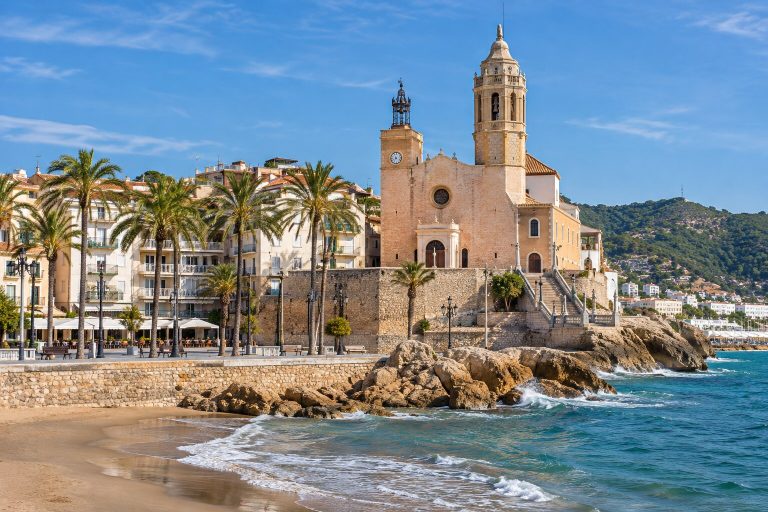
Catch the R2 Sud from a convenient Barcelona station and get off at Sitges. It’s a short walk into the old town and then downhill towards the church and seafront. The long promenade gives you room for a leisurely walk even if the beach itself is busy. This is the one I’d pick with only half a day, or with a group that can agree on lunch but very little else.
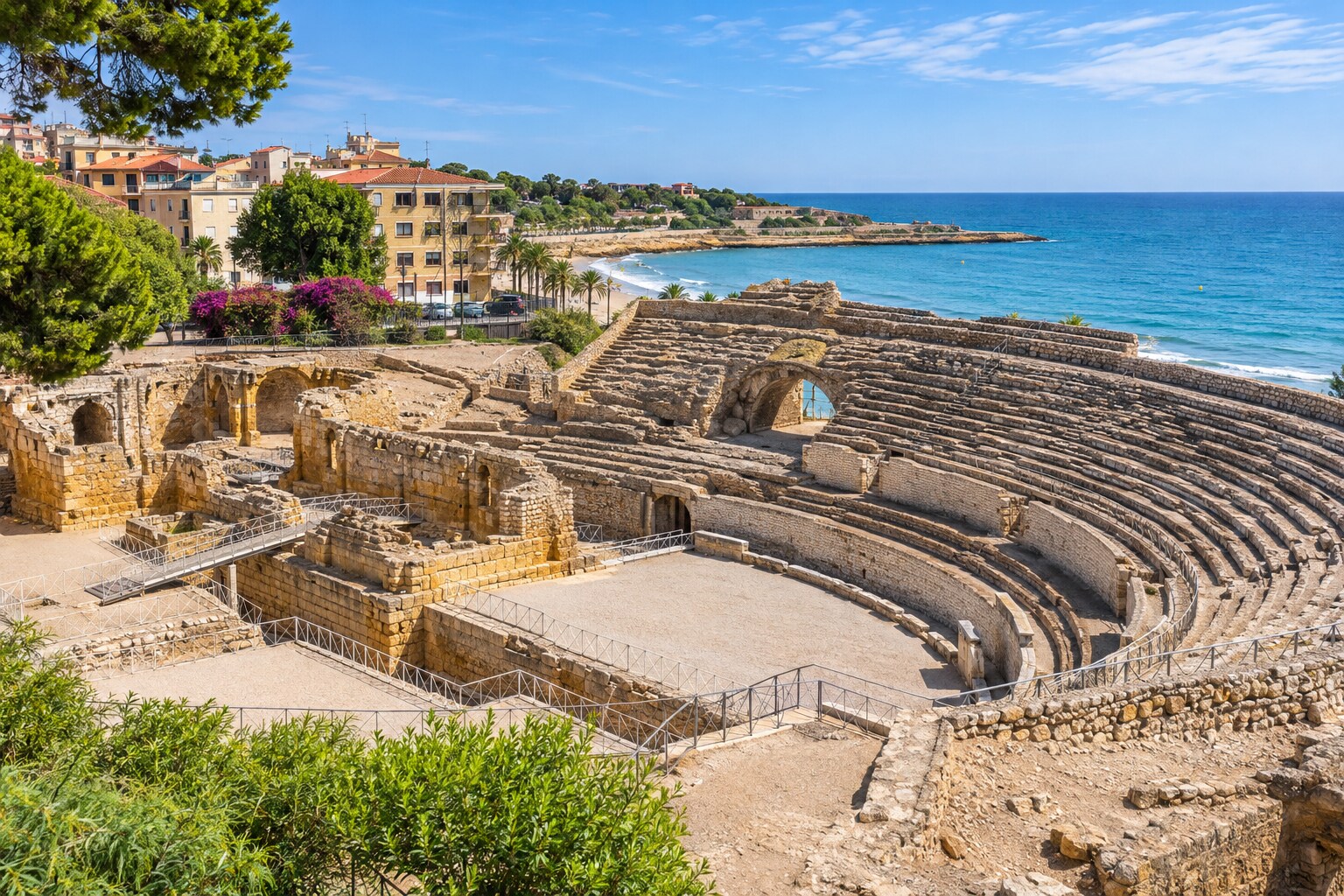
Roman amphitheatre above the sea in Tarragona
Roman amphitheatre above the sea in Tarragona.

Montserrat for a proper change of scenery

Take the FGC R5 from Plaça Espanya and change to the cable car at Montserrat-Aeri or the rack railway at Monistrol de Montserrat. This is the trip with the most moving parts, so give it a full day and check the connection both ways. If you plan to visit the basilica or take an upper funicular, check the separate operating hours before you book anything.

Girona for riverside streets and the old town

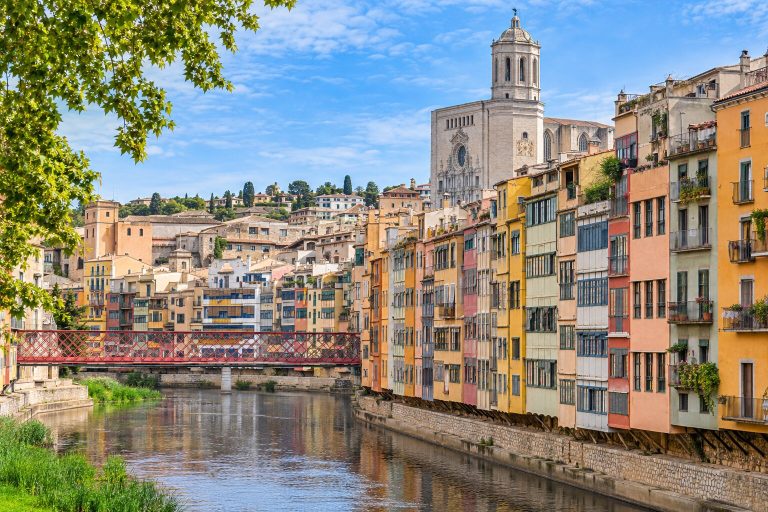
Search for trains from Barcelona Sants to Girona. Compare the faster reserved services with regional trains on the date you’re going. From Girona station, walk towards the River Onyar and cross into the old town. The river bridges make a good starting point. Around the cathedral and city walls, expect more climbing and steps, so build your route around what your group can comfortably walk.

Tarragona for Roman ruins with a sea view

For the simplest walk on arrival, search for a train to Tarragona, the city station. Camp de Tarragona is a separate station outside the city and needs an onward connection. From the city station, plan an uphill walk towards the old town and amphitheatre. Check the amphitheatre opening hours first, especially outside summer or around holidays.

Which trip should you book first?

I’d sort Montserrat first if you want a particular connection or monastery visit. If you’re taking a reserved train to Girona, compare ticket options early. Keep Sitges flexible if your main plan is a stroll by the water, and use Tarragona for a day when you have time to see more than the amphitheatre. Check both directions for your date and leave enough time to walk back to the station.

Match the trip to the time you actually have

Just an afternoon: Sitges is the easiest fit. You can get off the train, walk into town, see the church and have a drink by the water. You’ll have more time out in the fresh air and less time watching a clock. It’s also a useful option if your morning in Barcelona runs late.

A full day with a mixture of sights: Girona gives you riverside streets, museums, cafés and the old town in a compact area. Tarragona works just as well if your group leans towards Roman history and coastal views. For both, pick one main sight and one optional stop so a long lunch or an unexpected queue doesn’t throw out the rest of the day.

A day outdoors: Save a clear day for Montserrat. Check the weather where you’re going as well as in Barcelona. If you’re building a walk into the trip, decide on a turnaround time based on the ride down. A beautiful mountain view is still a beautiful mountain view if you only stay long enough for one trail.

Three small itineraries for beyond the station

Girona: Start at the Onyar bridges, then climb into the old town towards the cathedral. If the weather is good and your group is comfortable with steps, take in a section of the city walls. The Girona tourist office site offers a city map, and its city walls guide shows access points. Keep an eye on the return walk to the station if you’ve booked a reserved service.

Tarragona: Start at the Balcó del Mediterrani for a view of the coast, then head for the Roman amphitheatre. If you have more time, continue to the Part Alta for the old town, cathedral area and a break in one of the squares. Check the official opening calendar for the monuments you want to enter. For a different pace, make the day mostly a walk and pick just one paid site.

Sitges: Link the station, church and promenade on a short loop, with the old town on one leg and the seafront on the other. The Sitges visitor map shows beaches, museums and facilities. If rain is likely, look up the museums before deciding whether to go or switch to Girona.

Booking, transport maps and common mix-ups

Use the Barcelona metro and bus map to work out the first leg to your station. Sants, Plaça Espanya and Passeig de Gràcia are useful starting points for different reasons. Check the operator’s name alongside the station name, especially at a large interchange. A city metro ticket, a regional rail ticket and a reserved mainline booking work differently.

For a reserved train, leave time to find the right departure area, and keep your return confirmation available offline. For a local service, check the day’s engineering notices and the last comfortable return. If someone in the group needs step-free access, check the railway station and the walking route in town separately. Girona’s old town and Montserrat’s longer walks can be quite different underfoot from Sitges’ seafront promenade.

Can you fit two destinations into one day?

For a first visit I’d stick to one, especially if you want time for lunch and a proper look around. Sitges is the exception if you want a seaside afternoon after a morning in Barcelona itself. For the longer trips, an early start and one clear destination gives you enough time to improvise when you arrive, which is usually when the day gets interesting.

Plan your journey: Rodalies R2 Sud · FGC R5 · Renfe journey planner.

For more ways to spend your time in the city, see our Barcelona guides.

Keep planning: Sitges by train guide · Montserrat by train guide.

The first thing I’d check before leaving for Barcelona is the terminal on my boarding pass. It’s a small detail that makes a surprisingly big difference once you’re standing at El Prat with a suitcase and a suddenly urgent need for coffee. Getting from Barcelona airport to city centre is straightforward once you know where you land and where you want to end up.

The quick answer: Take Aerobús to Plaça Catalunya from either terminal. Take the R2 Nord train if you land at T2 and need Barcelona Sants. The metro makes sense if your accommodation is near L9 Sud or an easy connection from it.

For Plaça Catalunya, take Aerobús

Follow the airport bus signs and look for A1 at Terminal 1 or A2 at Terminal 2. Both run into central Barcelona and stop at Plaça Catalunya. You can also get off at Plaça Espanya if you’re staying around that end of town. Buy a dedicated Aerobús ticket and check the operator’s current fares if you’re weighing up a return.

Plaça Catalunya is a handy arrival point for the top of La Rambla, the Gothic Quarter and the lower end of Passeig de Gràcia. Check the walking route from the stop to your accommodation while you have Wi-Fi. A ten-minute stroll looks a little different after dark when you’re towing two cases over old paving.

Traveller pulling a suitcase through a glass airport terminal
Traveller pulling a suitcase through a glass airport terminal.

For Barcelona Sants, take the R2 Nord from T2

At Terminal 2, follow signs for the railway station and take the R2 Nord towards Barcelona. The train calls at Barcelona Sants and Passeig de Gràcia. Sants is the one you want for an onward mainline train. Allow time to find the right concourse and platform if you’ve booked a separate departure.

Landing at Terminal 1? Use the airport’s free terminal shuttle to reach T2 before taking the train. Factor in that extra leg when comparing routes. For a hotel by Plaça Catalunya, the direct A1 usually makes for a simpler arrival.

When the airport metro makes sense

L9 Sud serves both terminals. It’s useful for accommodation along the line and for some connections, including L1 at Torrassa or L5 at Collblanc. For Plaça Catalunya or Sants, work out where you’ll change and how much walking that involves before committing to the metro.

The airport metro stations have special ticket rules. TMB lists T-casual among the tickets that are invalid at the two airport metro stations. Buy an airport metro ticket or check whether your chosen pass includes those stations.

Arriving late or heading back to the airport?

Check the live operator timetable against your expected arrival at the stop, with time for baggage reclaim. Aerobús is a good first service to check for a late flight. On the way back, double-check the terminal before you board: A1 and A2 go to different places, and the airport train takes you to T2.

Compare the routes before you leave arrivals

Staying in the Gothic Quarter or by La Rambla? Start by looking at Aerobús. Plaça Catalunya gives you a clear landmark to work from, and the route avoids dragging a case through a metro interchange. Ask the hotel which street entrance to use, especially in a pedestrianised part of the old town. If you’re staying farther into the Gothic Quarter, pull up the final walking route before choosing a stop.

Taking another train from Sants? From T2, the airport train gives you a direct ride to the station. From T1, compare the shuttle and train with a taxi if your connection is tight. If the onward ticket is separate from your flight, give yourself time for delays and to find the departure area. Search for Barcelona Sants in both timetables so you know you’re comparing the same station.

Staying near Fira or the university area? Put the hotel’s actual address into the TMB metro and bus map or journey planner. An L9 Sud stop might put you closer to the door than the airport bus. At the airport, keep an eye out for the metro logo and the name of the terminal station. The rail and metro signs at T2 lead to different services.

Travelling with luggage, children or reduced mobility

The easiest transfer is often the one with the fewest changes. Check the distance from the stop to your accommodation as well as the ride itself. If you need a step-free journey, check the lift status at both the airport and the station where you change. TMB’s maps and operator information are a better starting point than assuming every interchange works the same way.

Keep the address, booking reference and a screenshot of your chosen route somewhere you can open offline. If you’re travelling with a pushchair or oversize luggage, check the relevant operator’s conditions. On the return, work back from the time you need to reach the terminal, then allow for the walk to the stop and the possibility of a full vehicle or a missed departure.

A first afternoon in Barcelona after dropping your bags

From Plaça Catalunya, walk towards the Gothic Quarter. The streets around the cathedral are a fine place to get your bearings. If you want somewhere quieter to pause, look up Plaça Sant Felip Neri and make your way there through the side streets. Head towards El Born or the waterfront if you still have energy. A loose route like this gives you a proper first look at Barcelona without betting your afternoon on an on-time flight.

If you’re staying near Sants, you can head towards Plaça Espanya and the lower slopes of Montjuïc instead. Save big timed attractions for another day unless you’ve left a generous buffer. If you’re already tired, a short wander and dinner near the hotel are a far better use of the evening than crossing the city twice.

Maps and visitor help to keep handy

Save the official Barcelona metro and bus map for the rest of your stay. At Plaça Catalunya, the Barcelona tourist information office can help with maps and local visitor questions. Check the opening hours if you’re arriving late, and use the airport and operator links below for live transport information.

Plan your journey: Aerobús routes and tickets · Aena airport train information · TMB airport metro and ticket rules.

Once you’ve dropped your bags, our Barcelona guides will help you plan the rest of the trip on foot and by public transport.

Keep planning: Barcelona day trips by train.

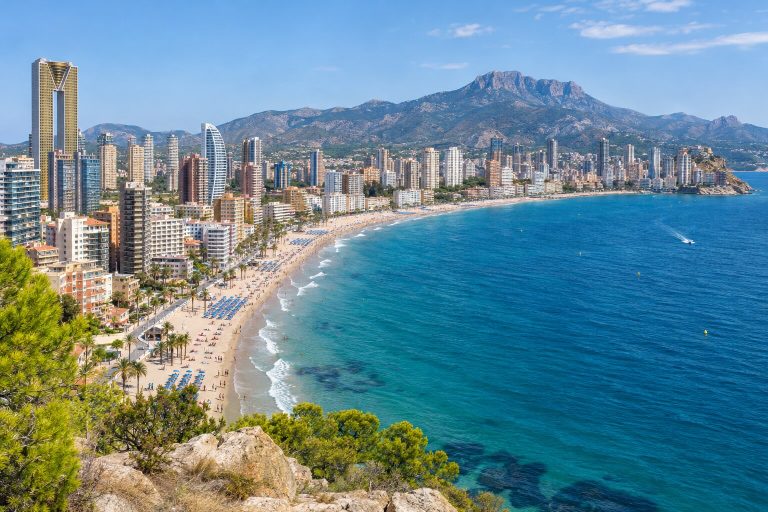
There’s a satisfying moment on the way into Benidorm when the skyline appears and the sea opens up beyond it. It’s even better when somebody else is driving and you can actually look out of the window. The journey from Alicante Airport to Benidorm is easiest when you pick your coach stop before you book.

The quick answer: For most arrivals, book the direct ALSA coach from Alicante–Elche Miguel Hernández Airport to Benidorm. Search using the airport as your origin. ALSA also sells trips from Alicante city, and that’s a different place to start your holiday.

Where to catch the ALSA bus

ALSA lists its airport stop on Level 2, in the departures area. If you’ve just collected a suitcase downstairs, head up and follow the signs for buses. Check the bay and departure time on the day, especially if several coaches are waiting outside.

Book through ALSA for your travel date and keep the ticket handy on your phone. Leave a buffer after your flight for passport control and bags. When comparing a cheap fixed departure with a later or more flexible ticket, read the change conditions before you pay.

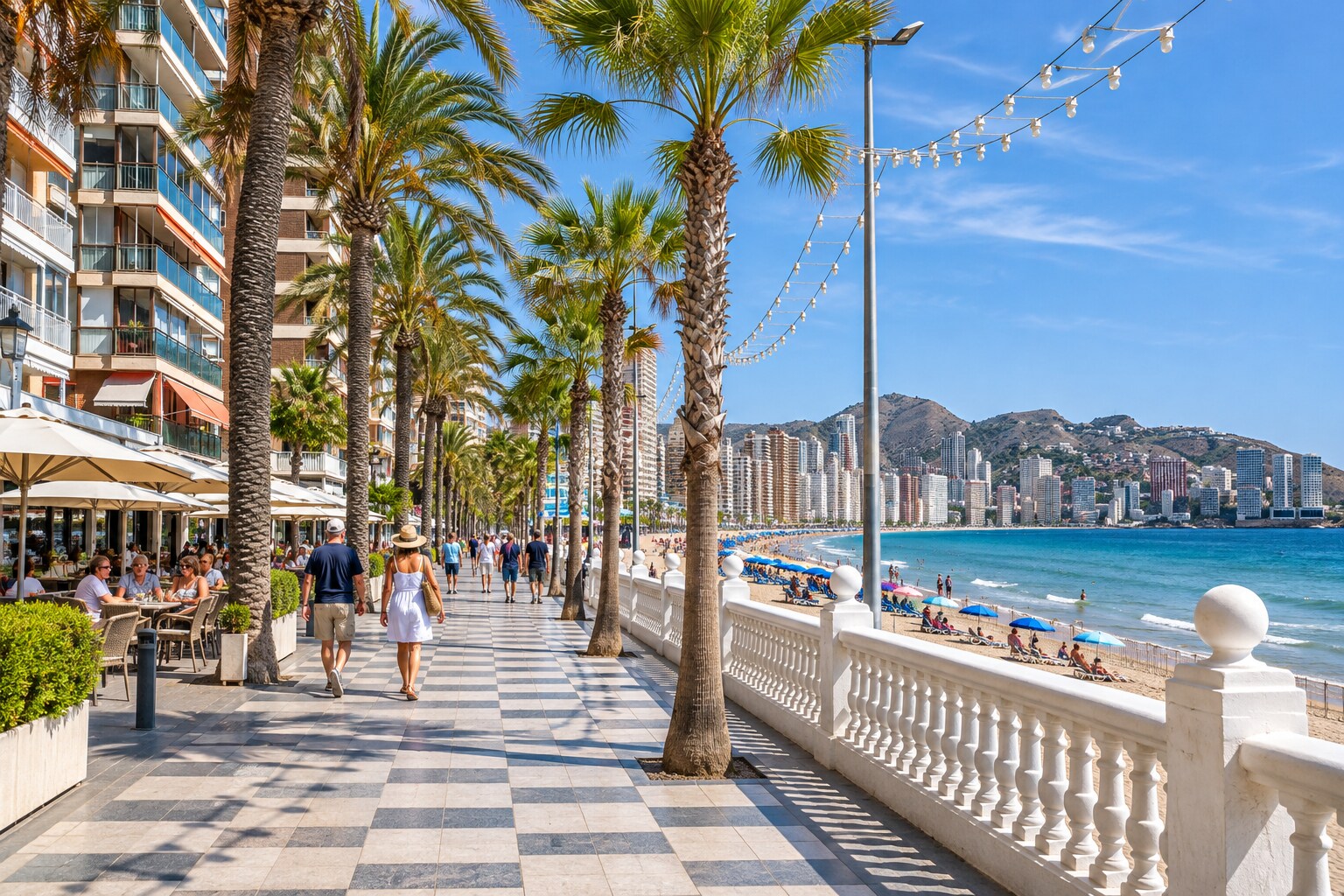
Palm-lined promenade beside the beach in Benidorm
Palm-lined promenade beside the beach in Benidorm.

Which Benidorm stop should you choose?

Look at the exact stop offered on your departure and map it against your accommodation. ALSA lists Benidorm bus station and an Avenida Europa stop on its route information. Availability can vary by departure. Avenida Europa can be handy for the Levante side. From the bus station, check the onward walk or local connection, particularly if you’re staying down by the beach.

If you’re travelling with someone who finds hills or long walks difficult, check the route to the hotel door and ask ALSA about boarding assistance in advance. A little planning at home is much more pleasant than discovering the gradient with a suitcase in tow.

Can you take a train or tram from the airport?

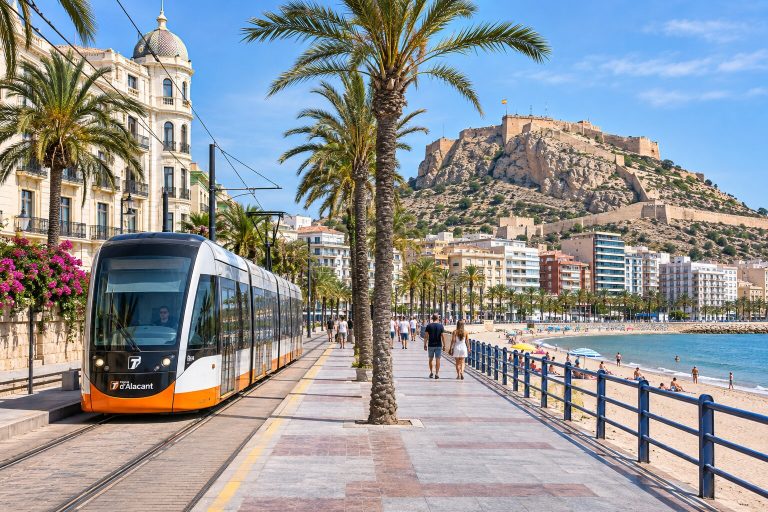
The rail option starts in Alicante city. Take the C6 airport bus to Luceros, then use the TRAM d’Alacant service towards Benidorm. Check the operators’ journey planners for each leg and leave time for the connection. This can suit a stopover in Alicante or a daytime trip where you want to enjoy the coastal stretch. For a straightforward airport transfer, the direct coach saves a change.

Late arrivals and the journey back

Use your actual flight date when checking the last coach. If you arrive after it, price up a pre-booked transfer or taxi before you travel. For the return, search in the other direction and confirm your departure stop from the ticket. The place you got off is an easy thing to remember and an equally easy thing to assume.

Plan the whole transfer, including the hotel door

Before paying for the coach, compare the departure against your flight arrival and the arrival stop against your accommodation. I’d give the second check just as much attention as the first. Benidorm stretches around two bays, and a hotel with a beach in its name can still be a fair walk from the stop. If you’re staying in an apartment, ask the host for the street entrance and key collection hours.

Put the coach stop and the hotel into your map as separate pins. That makes it easier to judge whether you can walk, want a local bus or need a short taxi ride. A group with several cases might prefer a taxi for the final stretch even if the coach works perfectly for the main journey. Check ALSA’s current luggage rules if you have golf clubs, bulky bags or a pushchair.

When a coach, shuttle or taxi makes sense

Direct coach: The first option I’d check for a solo traveller or couple whose flight lines up with the timetable. The stop and scheduled departure should be clear when you book. Leave enough time to walk from arrivals to the coach bay, and find out what happens to your ticket if your flight is late.

Shared shuttle: Worth comparing if it serves your accommodation area at a useful time. Read the exact drop-off and pickup terms. Some services use designated stops, and a shuttle that serves several hotels can take longer than you expect.

Taxi or private transfer: Useful for late flights, a group splitting the fare or travellers who need a door-to-door ride. Confirm the full price, the pickup location and any needs such as child seats or wheelchair space before booking. For current airport arrangements, start with Aena’s transport information.

What to do once you reach Benidorm

Start in the old town if you want to see both bays without committing to a long walk. Make for the Balcón del Mediterráneo, the viewpoint between Levante and Poniente. The upper area gives you a sense of the coastline even if the steps down to the lower viewpoint don’t suit everyone in your group.

For a livelier first walk, head towards Levante and follow the promenade. If you’re after a more leisurely stretch, turn towards Poniente and the seafront near Parque de Elche. Pick one side for the first afternoon, stop for something to eat and leave the other for the next morning. You can build an entire short break around the waterfront and old town with very little time spent waiting for a ride.

Tourist information and the return flight

The Benidorm council’s tourist information page is the place to check local services and visitor assistance. For the journey home, confirm the boarding stop the evening before and leave enough time to reach it from your accommodation. If you have an early flight, compare the first coach with a pre-booked pickup before deciding how early to set the alarm.

One small check if you’re arriving in winter

Choose transport for the date and day of the week you land, not the first departure shown in a general search. Shorter daylight can also change how appealing a walk to the hotel looks. If you expect to arrive after reception closes, have the property’s instructions and contact details available offline. Once you’re checked in, the waterfront is an easy way to get your bearings the next morning. Save the longer walk to the other bay for when you know where you’re starting from.

Plan your journey: ALSA airport–Benidorm timetable and tickets · Aena airport bus information · TRAM d’Alacant journey planner.

Keep planning: Alicante to Benidorm tram guide.

For more itineraries, browse our car-free destination guides.

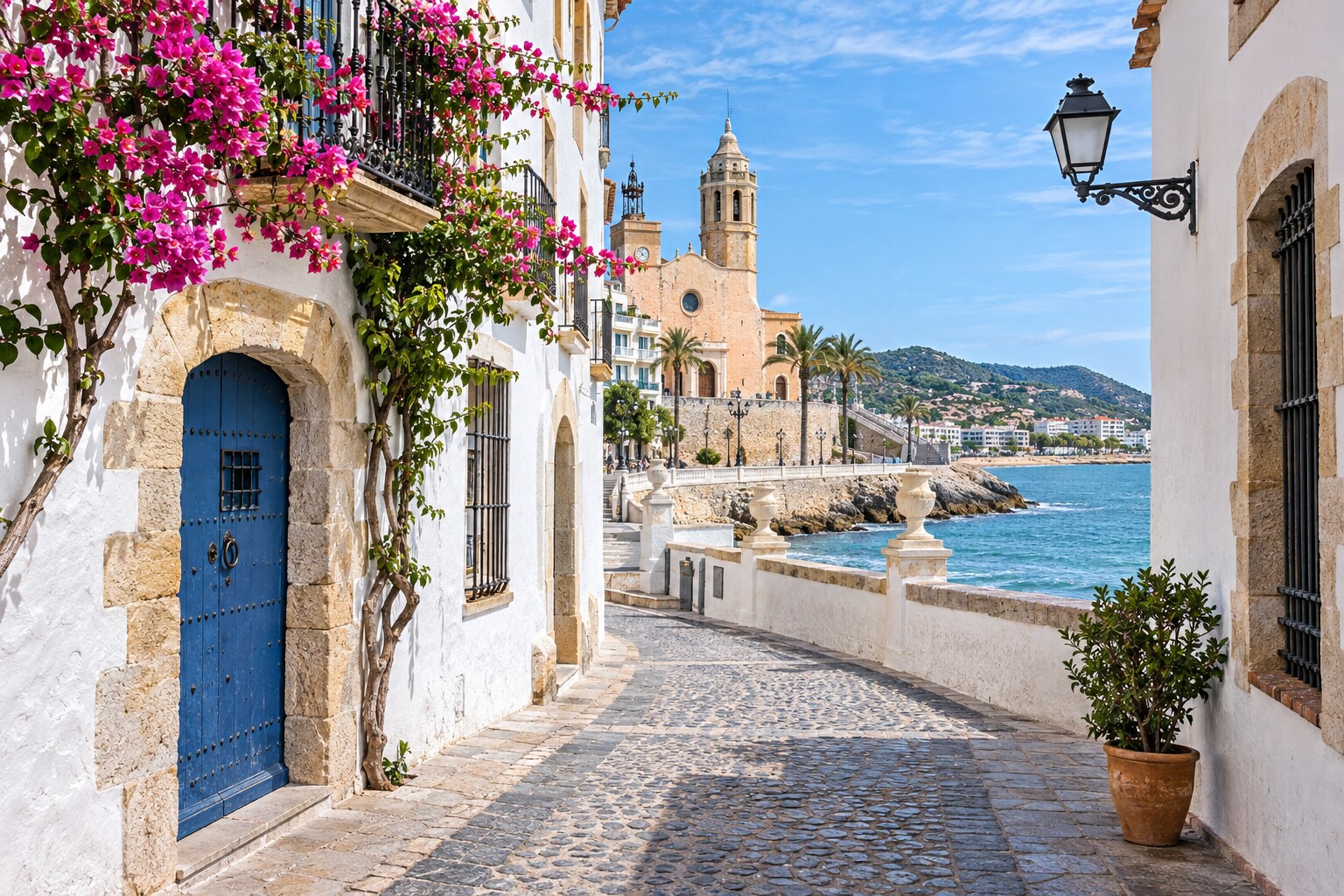
One minute you’re working out which exit to take at Passeig de Gràcia. A short train ride later, you can be looking down a whitewashed lane towards the Mediterranean. Sitges is the Barcelona day trip I’d suggest when the whole point of getting away is to do a little less. Travelling from Barcelona to Sitges by train leaves you the better part of the day to enjoy the coast.

The quick answer: Take the R2 Sud suburban train to Sitges from Barcelona Sants, Passeig de Gràcia or Estació de França, depending on the service. Check that Sitges appears on the departure board. The train’s final destination may be farther down the line.

Pick the right station in Barcelona

Passeig de Gràcia is handy if you’re staying in the Eixample or near Plaça Catalunya. Follow signs for Rodalies, as the metro shares the station name. Barcelona Sants works well from the western side of town or if you’re already arriving by mainline train. Estació de França can make sense from El Born or Barceloneta when the service you want starts there.

Open the Rodalies timetable for your date, look for R2 Sud and buy a ticket valid to Sitges. If you already have a Barcelona travel pass, check its zone coverage before boarding. Keep your ticket handy for the barriers at either end.

Whitewashed Sitges lane opening onto the sea
Whitewashed Sitges lane opening onto the sea.

Walk from Sitges station to the sea

From the station, head into the centre via Carrer de Jesús and wander towards the old town. The church of Sant Bartomeu i Santa Tecla sits above the waterfront, where you can get your bearings before choosing which way to walk. Platja de la Fragata is just below the church area. For a longer, gentler stroll, follow Passeig Marítim west along the waterfront.

With half a day, I’d pick the old town and one stretch of promenade, then stop for lunch. With a full day, add a museum or beach stop and leave a bit of time for the small streets behind the seafront. The beauty of Sitges is that you can change your mind as you go.

Heading back to Barcelona

Check the return before you sit down for dinner, especially on a Sunday or during engineering works. Confirm which Barcelona station the service calls at and check the platform at Sitges on arrival. If step-free access matters, check your departure and arrival stations with Rodalies and plan a waterfront route with fewer changes in level.

A half-day route through Sitges

Make the old town your first stop. Walk from the station towards the church, then take a moment to look both ways along the coast. Go down towards Platja de la Fragata for a quick look at the sand and harbour area. From there, turn west for the broad promenade or loop back through the small streets if the sun is strong. Give yourself time to stop somewhere that catches your eye. A day by the sea rarely improves when you start timing every corner.

If you arrive around lunchtime, take a short walk first so you can decide which part of town you’d like to eat in. The waterfront is an easy option if you want the view. A few streets inland, you can pick a place closer to the station for the return. Keep a pin for the station exit on your phone, particularly if you expect to head back after dark.

Make a full day of the old town and beaches

Start with the waterfront lanes around the church and the museum quarter. The Museu de Maricel and Cau Ferrat are worth looking up if you’re interested in art or want a break from the heat. Check the opening days and current visit arrangements through Sitges Tourism. If one is the main reason for your trip, sort that out before choosing a departure from Barcelona.

Continue round to Platja de Sant Sebastià for another view of the old town and a quieter-feeling stretch of seafront. Or walk the other way from the church towards the wider promenade and spend the afternoon west of the centre. The official Sitges map of beaches, museums and visitor facilities is useful for plotting the route and finding the tourist office.

What to watch for when you travel

Barcelona Sants is big enough that finding your way from the street to the suburban platform can take a little longer than it looks on a map. At Passeig de Gràcia, follow the rail signs rather than the first entrance with a metro symbol. On a busy beach weekend, leave yourself room to take the following service if the first one is crowded, and keep the return flexible until you’ve checked the actual timetable.

Sitges is compact, but the old town has slopes and steps. A beach wheelchair, changing facilities or a particular step-free route can make the difference for some visitors. Check current beach and facility details with the tourist office, and confirm any rail assistance separately. On a hot day, plan a shorter route with a break indoors. In cooler weather, the promenade and old town make a satisfying trip even if swimming was never on the cards.

One easy decision before you leave Barcelona

Pick either a beach afternoon or an old-town-and-museums day as your main plan. That helps you pack for the right outing and makes it easier to change tack if the weather turns. For a beach visit, use the tourism site to check facilities and seasonal services. For a cultural visit, have one indoor stop and one outdoor walk in mind. The official tourism homepage also lists local events, useful if a festival falls on your visit and you want to plan around crowds or see what’s on.

Coming straight from the airport?

Plan that trip separately. The R2 Sud through Sitges is a different service from the R2 Nord airport train. Search from your actual terminal and check the interchange shown by the planner, particularly if you have bags or are arriving late. If you’re visiting Sitges as a day trip from your Barcelona accommodation, use the city departure that makes the morning easiest and keep the airport route out of the equation.

Plan your journey: Rodalies R2 Sud line and stations · Sitges tourism train information.

Spending a few days in the city first? Start with our Barcelona guides.

Keep planning: Barcelona day trips by train.

Barcelona has a way of filling a city break all on its own. Then you see Montserrat’s rounded stone peaks rising above the countryside and suddenly you’re making room for a day in the mountains. The route is wonderfully simple once you know which stop to get off at. Getting from Barcelona to Montserrat by train involves one change, and the ride up the mountain is part of the fun.

The quick answer: Take the FGC R5 from Plaça Espanya towards Manresa. Get off at Montserrat-Aeri for the cable car or stay on to Monistrol de Montserrat for the rack railway. Both take you up to the monastery area.

Start at Plaça Espanya

Follow signs for FGC rather than the metro platforms. Check the R5 departure and decide how you want to go up before buying a combined ticket. Look at what the ticket includes in each direction. If you’d like to go up one way and down the other, check the separate tickets and both timetables before setting out.

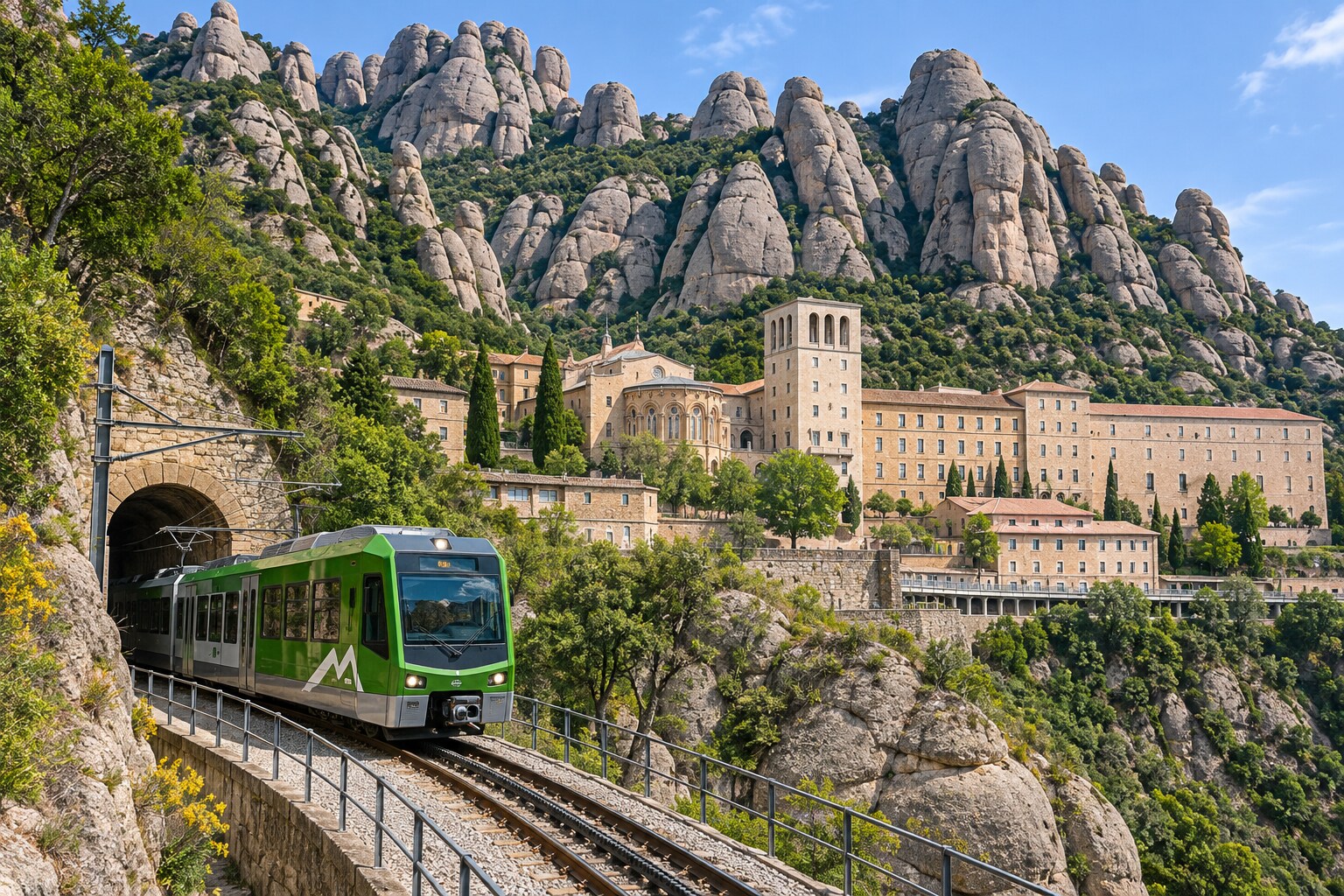
Green rack train below Montserrat’s rocky pinnacles
Green rack train below Montserrat’s rocky pinnacles.

Choose your ride up the mountain

The cable car: Leave the train at Montserrat-Aeri and follow signs for the Aeri. This is the option for a quick, airy ride and a sweeping view on a clear day. Check the operating calendar and any weather notices before boarding the train from Barcelona. If anyone in your party dislikes heights, have that conversation before you get there.

The rack railway: Stay on the R5 to Monistrol de Montserrat and change to the Cremallera. The train climbs towards the abbey with the peaks coming into view as you go. It’s the route I’d choose for a gentler ride or when travelling with someone who prefers to keep their feet closer to the ground. Check the operator’s accessibility details for your needs.

Leave time for the monastery and the views

Start around the monastery and its terraces, then see how much time you have for a walk. If the basilica, the Black Madonna or a choir performance is the reason you’re going, check visiting hours and reservations separately from your transport ticket. The upper funiculars are separate services, so check their opening before building the day around one.

Bring a layer and shoes you’re happy walking in. Clouds can sit over the peaks while the city is in sunshine. On a murky day, the abbey and nearby viewpoints can still fill an enjoyable visit without a long hike.

Check both legs of the return

Find the last practical descent and the connecting R5 back to Barcelona while you still have phone signal. Aim for an earlier connection if you’re travelling in winter or around a holiday.

Map out the connections before you buy a ticket

Put three names in your notes: Barcelona Plaça Espanya, Montserrat-Aeri and Monistrol de Montserrat. The middle two serve different mountain lifts. Use the FGC R5 line map and timetable to find the stops in sequence. If you’re navigating with a map app, select the station name in full. A pin for the village of Monistrol or the monastery is a different destination from the rail interchange.

Combined tickets can make the day easier, but compare what you will actually use. Some travellers want just the main train and mountain connection. Others want an attraction or a funicular too. Read which ascent and descent a product covers and check the opening hours separately. If the weather makes you change plans, knowing what you bought will save a conversation at the wrong ticket window.

What to do at Montserrat with three or four hours

Start at the abbey precinct and have a look at the views from the main terraces before heading indoors. The basilica and the Black Madonna draw visitors for very different reasons, from architecture and music to pilgrimage. Use the official Montserrat ticket office to check the basilica, museum and choir options for your date. A choir performance can shape the whole day if you’re keen to hear it, so work your train around the actual time shown.

Then pick one more thing. If the weather is clear and you’re comfortable on slopes, consider a walk towards Sant Miquel. The official walking route and map help you see where the paths diverge and whether you want to continue. For a shorter day, stay near the abbey, make time for the museum or a bite to eat and take an earlier train back.

What to pack and what to check on the day

A light layer, water and shoes with some grip will serve you better than a packed itinerary. Check the mountain forecast and keep the distance and climb in mind if you’re heading beyond the monastery area. If you have a pushchair, use a wheelchair or prefer to avoid steep paths, ask the relevant transport operator about boarding and check the route between the places you actually want to visit.

Lunch can be as simple as something you brought from Barcelona, which gives you freedom to eat when it suits the group. If you want a sit-down meal, build it around any timed visit and the descent you plan to catch. On busy dates, allow a little time to queue for your ride down. Aim to be at the departure point early enough to catch a backup service if the day slips.

Build a bad-weather backup into the trip

If you wake up to low cloud or wind, check whether the cable car is operating before leaving Barcelona and see if the rack railway fits. If the views or a longer walk were the main reason for the trip, you may get more out of swapping it with another day. Keep the Montserrat visitor site handy for current opening details, visitor information and route updates.

How early should you leave Barcelona?

Work back from the one thing you most want to do. For a timed basilica visit, allow for the train, the mountain connection and the walk from the arrival point. For a longer route on foot, leave early enough to have a comfortable margin before the last ride down. If you just want a look around the abbey and a short walk, a later start can work well when the published return times give you room.

Plan your journey: FGC R5 line · Montserrat cable car · Rack railway and combined tickets.

Keep planning: Barcelona day trips by train.

For more itineraries, browse our Barcelona guides.

On a sunny day, there’s a lot to be said for travelling along the Costa Blanca with your nose practically pressed against the window. The tram from Alicante to Benidorm makes the journey part of the day, particularly if you’ve left time for a stop by the sea. The Alicante to Benidorm tram is a handy way to see a stretch of coast that’s easy to miss on the road.

The quick answer: Start at Luceros in Alicante city and search for the L1 to Benidorm using the TRAM d’Alacant planner. Check the exact end stop and any replacement service for your date. If you’re starting at the airport, allow for a separate airport bus or take the direct airport coach to Benidorm.

Where to board in Alicante

Luceros is a useful starting point from central Alicante. Follow signs down to the TRAM station and check the platform display for the L1 towards Benidorm. Several services share the city section, so check the line number and destination rather than hopping onto the first vehicle that appears. If you’re starting nearer the old town, check whether boarding at Mercado works better for your date.

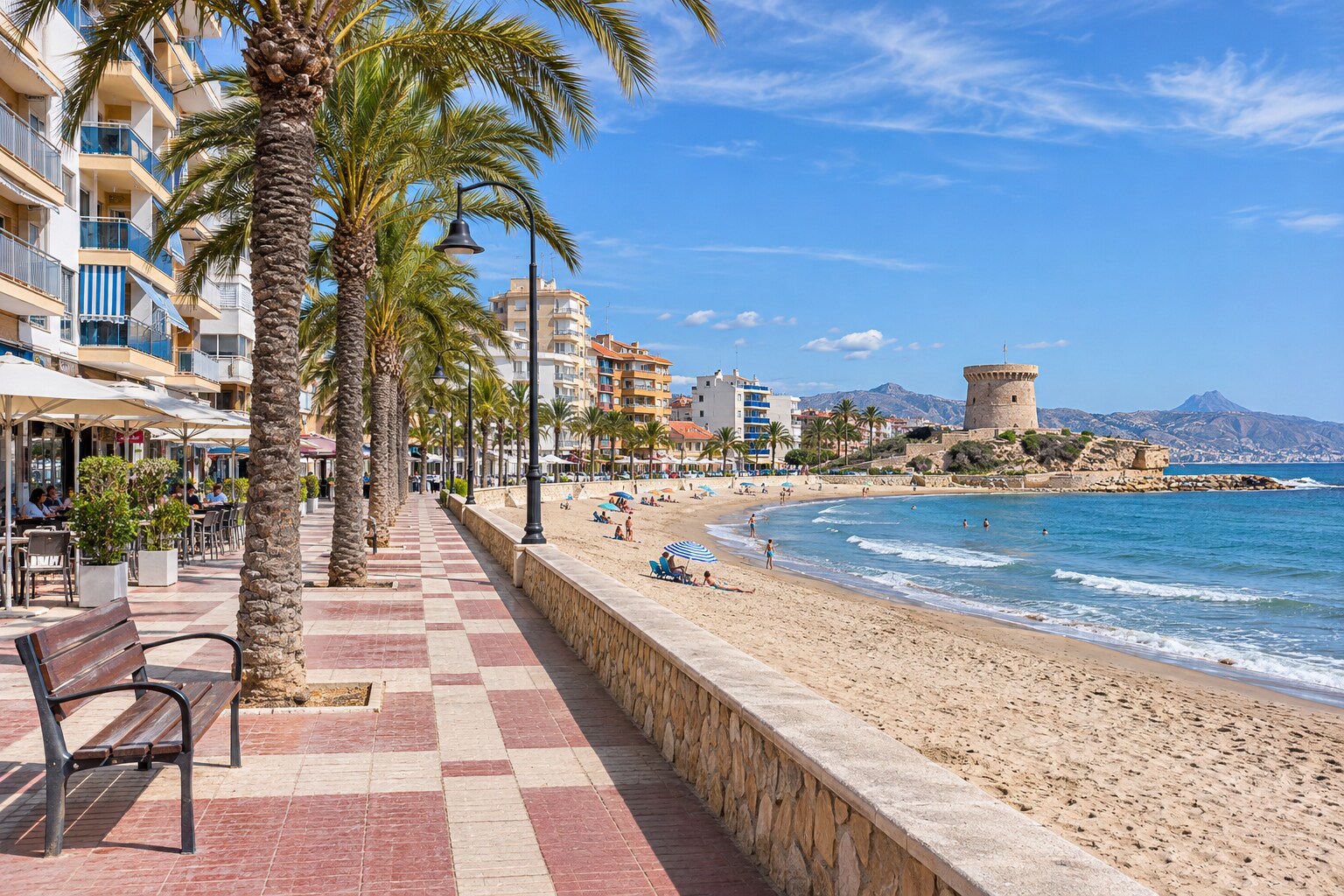
Beach and palm-lined waterfront at El Campello
Beach and palm-lined waterfront at El Campello.

Tickets, zones and the timetable

Use the operator’s current zone map or journey planner to price the whole trip. A ticket that covers a short trip in Alicante may cover fewer zones than you need for Benidorm. Buy and validate the ticket as instructed and keep it until you’ve left the station. If you’re making several trips, compare the available passes and check which zones they include.

Check the tram timetable in both directions. Leave a buffer if you’re connecting from a mainline train, and look for notices about engineering work. If the app shows a replacement bus, check where it boards and allow extra time.

Make the last leg to Benidorm part of the plan

Search using your actual destination as well as the word Benidorm. The tram arrival and the beach are separate legs of the journey. Check a walking or local bus route from the stop the planner gives you. If you’re heading for the old town, Levante or Poniente, each has a different onward route. A taxi for that last stretch can be useful with bags or if walking in the heat is a concern.

Fancy a stop along the way?

El Campello makes a tempting break if you have the time. Check your fare before getting off and confirm how you’ll continue from there. If you’d rather keep the afternoon free for Benidorm, stay on board, enjoy the views and aim for a walk along the waterfront once you arrive.

Use the network map to choose your stop

Open the official TRAM d’Alacant journey planner and check the L1 against the operator’s network and fare-zone map. The map helps explain why a city ticket may be different from the one you’ll need farther up the coast. Use the live planner for the final answer on services and stopping patterns, particularly if you are travelling around holidays or during works.

Save the location of Luceros and your Benidorm stop on your phone. In Alicante, look for the TRAM entrance rather than following signs to the mainline railway station. In Benidorm, decide whether you want the old town, the Levante side or Poniente before working out the last leg. Check the walking route for slopes and busy roads. If it’s a day trip, make sure you know how to get back to the same platform or where a replacement bus would leave.

What to see on a day trip to Benidorm

Start with the old town and the Balcón del Mediterráneo. It’s a good way to see how the town sits between its two beaches before deciding where to go next. Give yourself time around the upper square and look down towards the lower viewing platform. You can enjoy the coastal view from above if the stairs are a concern.

From there, go east along Levante for the livelier promenade or west towards Poniente and Parque de Elche for a slower walk. If you’ve brought children or someone who prefers shorter stretches, pick one waterfront and build in a stop for lunch. A day spent trying to walk both bays end to end can feel suspiciously like exercise with an ice cream in the middle.

The municipal visitor information page is useful for local contacts and assistance. If you’re spending the night, map the hotel entrance from the tram stop before assuming you can wheel a case down the shortest line on the screen.

How to make El Campello a worthwhile stop

Leave enough time to walk down to the waterfront, stretch your legs and have a look at the beach and harbour area before heading back to the station. If you only have time for a quick dash to the water and back, enjoy the view from the tram instead. Check whether your ticket allows a break of journey or whether you need to buy the next leg separately.

Useful checks for families and step-free travel

Check the operator’s current station access, lift status and boarding information before setting off. If you’re taking the tram after a flight, factor in the walk and wait between the airport bus and the underground platforms at Luceros. From the city, leave extra time if a weekend event or a hot afternoon makes the stops busy. For an evening return, note a practical service as well as the last one and decide in advance how you’ll get back up from the seafront.

If your dates are fixed, recheck the journey planner the evening before travel. A saved map is helpful for finding stations, but current notices are what tell you whether the tram, platform or boarding arrangement has changed. That’s a five-minute check worth doing before you’re already halfway to the stop.

When the coach may suit you better

Compare Alicante city departures with ALSA’s Alicante–Benidorm route if you’re starting close to a coach stop or need a different return time. Put the exact pickup and drop-off in your map. A faster journey on paper can lose its advantage if you need to cross town at both ends. For a scenic outing with a flexible schedule, the tram is still the one I’d look at first.

Plan your journey: TRAM d’Alacant journey planner and service updates · Aena airport bus and tram connection.

Keep planning: Alicante Airport to Benidorm guide.

For more itineraries, browse our car-free destination guides.

Pisa is one of those places that makes sense the moment you unfold a map. The station sits south of the Arno, the Leaning Tower is north of it, and there’s a perfectly good morning of wandering between the two. That walk is half the reason I’d go. Travelling from Florence to Pisa by train gives you enough time for the tower and a proper wander along the Arno.

The quick answer: Search Trenitalia for a direct regional train from Firenze Santa Maria Novella to Pisa Centrale. From Centrale, you can walk through town to Piazza dei Miracoli. Plan on roughly half an hour on foot at an easy pace and allow more time if you want a coffee or a few photo stops.

Choose the right station and ticket

Firenze Santa Maria Novella may appear as Firenze S. M. Novella or Firenze SMN. It’s the natural starting point if you’re staying in central Florence. Check for a direct Regionale or Regionale Veloce service and compare the scheduled journey times on your date. Use Pisa Centrale as your destination for the walking route below.

Buy online through Trenitalia, in its app or at the station. Follow the instructions for the ticket you buy. A paper regional ticket generally needs stamping before travel, while digital regional tickets follow the validity rules shown in the app or confirmation. Keep the ticket handy until the journey is over.

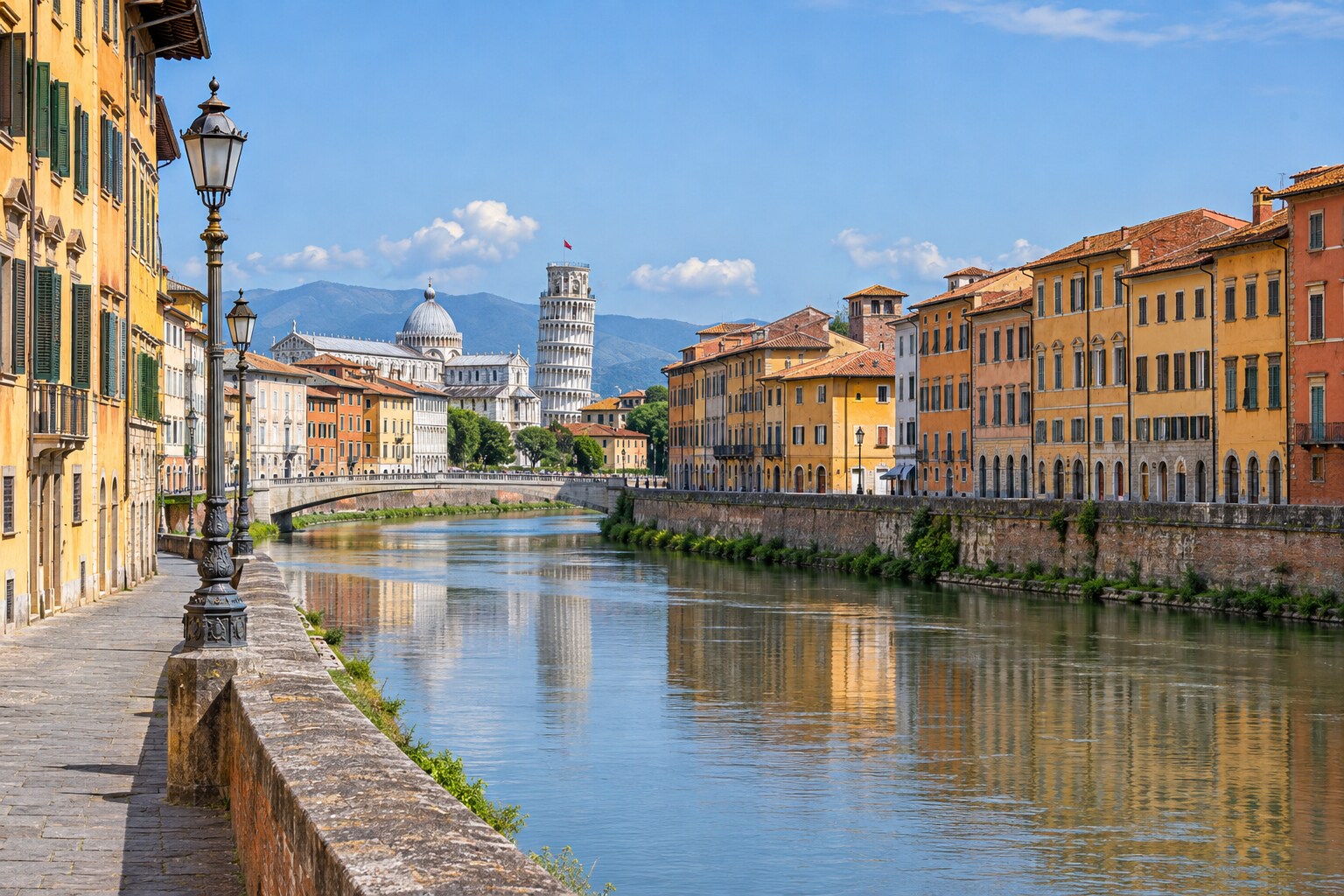
Warm-coloured buildings along the Arno in Pisa
Warm-coloured buildings along the Arno in Pisa.

Walk from Pisa Centrale to the Leaning Tower

Leave the station towards Piazza Vittorio Emanuele II and follow Corso Italia to the Arno. Cross at Ponte di Mezzo, then make your way through the old streets towards Piazza dei Cavalieri and Piazza dei Miracoli. If you’ve only got time for a quick visit, go straight to the square and leave the riverfront for the way back.

If you want to climb the tower, check the official booking and entry conditions before choosing a train. If it’s the view of the tower you’re after, give yourself time in the square to enjoy the cathedral and baptistery as well. The wonky landmark tends to get all the attention, but the buildings around it are worth a proper look.

Leave room for the return

Check services back to Florence before committing to a late lunch. If you’re catching a separate train from Florence that evening, give yourself a generous connection. If a timetable suggests Pisa San Rossore as an alternative near the tower, compare its services for your date before assuming it will be as convenient as Pisa Centrale.

A Florence-to-Pisa itinerary for a full day

Catch a morning train so you can spend the cooler or quieter part of the day walking. Start with Tuttomondo, Keith Haring’s bright mural near Piazza Vittorio Emanuele II, which is a short detour from the station. The Pisa tourism walking itinerary helps you locate it and gives you other stops to pick from along the way.

Continue along Corso Italia to the Arno and cross at Ponte di Mezzo. Walk on towards Piazza dei Cavalieri before reaching the tower. The square’s ornate buildings give you a change of pace between the busy shopping streets and the lawns of Piazza dei Miracoli. If you’re on a timed tower ticket, save any long detours for the walk back. Allow extra time for cobbles and crowds if you’re moving slowly or travelling with children.

At Piazza dei Miracoli, allow time to take in the whole complex. The cathedral and baptistery are worth lingering over even if the tower was the reason you booked the train. The city’s Piazza dei Miracoli guide gives you the lay of the square. Check the monument operator for tickets, time slots, bag rules and any age or access restrictions that matter to your party.

What to do after seeing the tower

Walk back towards the river by a different street and leave room for lunch. The Arno’s riverside streets offer a long view of the painted buildings and bridges. If you’d like an indoor stop, check what’s showing at Palazzo Blu before you go. For a shorter visit, choose a riverside stroll and head back to the station without rushing.

With only half a day, build the visit around the tower square and the walk across the river. With a full day, use that extra time for the mural, the old town and an unhurried meal. Pisa rewards a bit of wandering. You can see the tower in a hurry, but the day is better when you don’t have to turn round the moment you get there.

Maps, accessibility and the practical bits

Save four map pins: Pisa Centrale, Ponte di Mezzo, Piazza dei Cavalieri and Piazza dei Miracoli. The first and last are enough to get you there, and the middle two give you a clear walking route through town. If you need to minimise walking, look at local transport from the station and check the exact access conditions for the monuments you plan to enter.

Before leaving Florence, check the latest Trenitalia service notices, especially on a weekend with engineering works. Keep your return plan easy to find and read the change rules if you buy a specific departure. Travellers with onward flights should search for Pisa Aeroporto separately and check Trenitalia’s Pisa Airport connection information. The airport and the central railway station are separate stops.

If you’re travelling with a pushchair, decide who will take it through busy station areas and plan your tower visit around whatever the monument allows. For everyone else, the lightest day bag you can manage is usually the right one. Leave yourself time for the return walk, especially if you’ve picked a late train and the quieter streets look different after dark.

Can you add another Tuscan town the same day?

It can be tempting to add Lucca when you see it on the map. If the tower and the monuments are the point of your day, give Pisa enough time to walk both ways through town and sit down for lunch. If you already know Pisa and just want a short visit, look up the onward timetable before committing and work backwards from the last train you’re willing to take to Florence.

Plan your journey: Trenitalia trains and tickets · Visit Tuscany’s Leaning Tower guide · Official Piazza dei Miracoli visitor information.

Travelling up from Rome? Our Rome to Florence guide covers the first leg.

Keep planning: Cinque Terre by train guide.

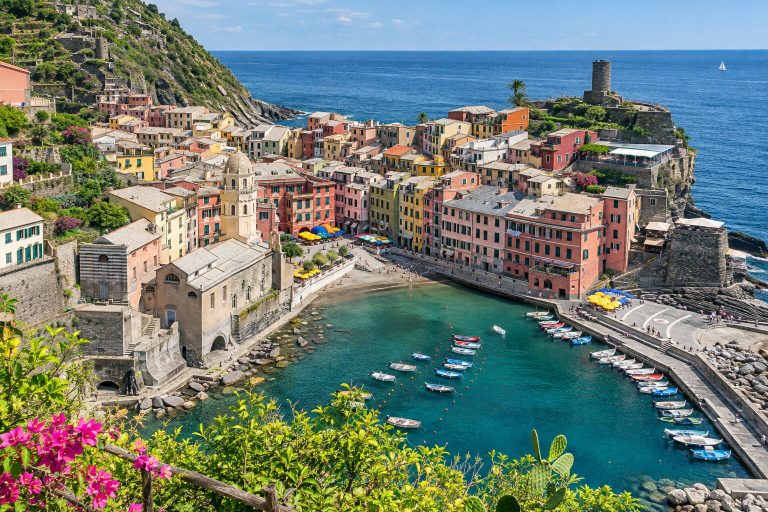
There’s a lovely bit of theatre to arriving in the Cinque Terre by train. The railway dips into a tunnel and then the sea appears again, with a village squeezed between the hills and the water. Give yourself permission to get off at just a couple of stops and enjoy them properly. Travelling from La Spezia to Cinque Terre by train gives you a choice of five villages before you even start walking.

The quick answer: Start at La Spezia Centrale and look for a regional service that stops at the village you want. From La Spezia, the five villages come in this order: Riomaggiore, Manarola, Corniglia, Vernazza and Monterosso. Check the station list before boarding, as services can have different stopping patterns.

Which village should you visit first?

Riomaggiore or Manarola make a good first stop if you want lanes, harbour views and a short trip from La Spezia. Expect slopes and some steps as you explore. Vernazza suits a harbour stroll and lunch. Monterosso is the one I’d pick for a longer seafront walk or a beach stop, with the waterfront close to the station.

Corniglia is the exception to plan around. Its village sits up above the railway station. Check the local shuttle and its operating hours if you’d rather skip the climb. If your group has limited mobility or is carrying luggage, check the station exit and the actual route to your accommodation before deciding where to stay.

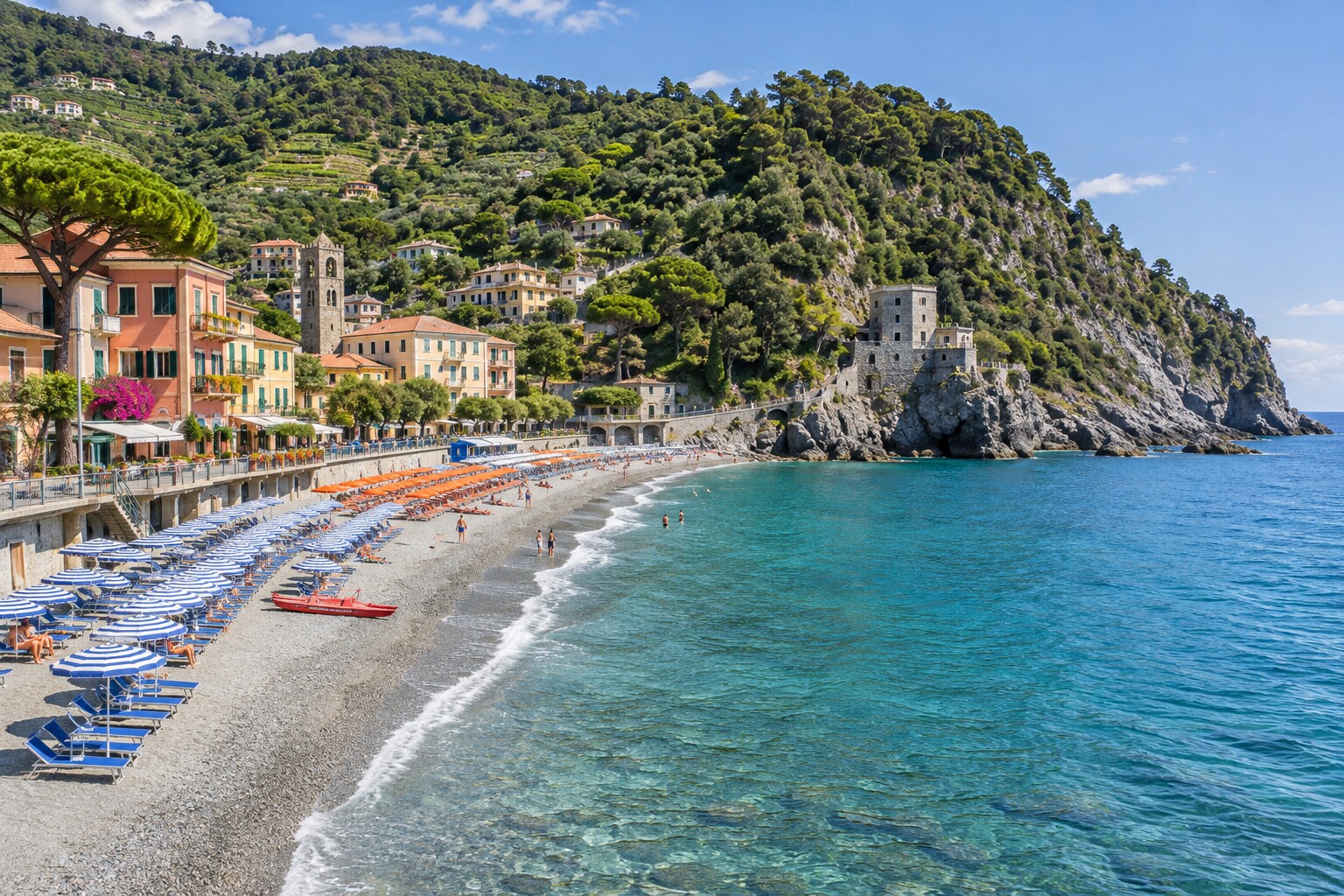
Beach and rocky headland at Monterosso al Mare
Beach and rocky headland at Monterosso al Mare.

Single tickets or the Cinque Terre train pass?

Price the journeys you actually want to take. If you’re visiting one village and returning to La Spezia, compare the cost of two individual tickets. If you’re hopping between villages or plan to walk a paid trail, check the current Cinque Terre Train Card price, inclusions and validity on your date. The train card and the trekking-only card cover different things.

Follow the validation instructions for the ticket you buy. Before setting off on a trail, check the national park’s current opening and any booking requirements. A line on the map can look inviting even when the trail is closed or requires a separate reservation.

Plan around the season

Use the live timetable for your date. The seasonal 5 Terre Express pattern and fares can differ from the regional services you’ll find outside peak season. Pick a return train before settling in for dinner, and keep an earlier option in mind if you’re connecting at La Spezia.

Two villages make an excellent first day

For a simple first visit, take an early train to Riomaggiore and explore the lower part of the village while you have plenty of energy. From there, take the train to Vernazza for the harbour and lunch, or choose Monterosso if you’d rather spend the afternoon by the beach. Keep the second village flexible until you see the weather and how much walking everyone wants to do.

If you’re staying in the area, you can give Manarola or Corniglia its own morning. Manarola works well when you want a harbour view and time to wander. Corniglia makes more sense when the village itself is part of the plan and you’ve allowed for the shuttle or climb. Looking down from up there feels quite different from exploring a village at sea level.

What to see beyond the railway platform

In Vernazza, take the lanes down to the harbour and see how the boats, houses and water all fit into the same little pocket of coast. In Monterosso, start with the Fegina waterfront by the station, then decide whether to walk towards the older part of town or stay near the beach. The park also describes a nature itinerary from Monterosso station if you fancy a longer walk and the conditions are right.

The Via dell’Amore is the famous coastal path between Riomaggiore and Manarola. Check the national park’s Via dell’Amore reservation and access rules before building it into your itinerary. An entry slot, direction of travel or a closure can change how you put the two villages together. The train makes a straightforward backup if you can’t get the slot you want.

Check the trail map before buying a pass

Open the park’s official trail network map and status list to check which paths are open and how they’re graded. The coastal setting can make short lines on a map look deceptively easy. Think about stairs, steep sections, footwear, heat and whether you’d be happy turning back. If you only plan to stroll within villages, compare rail fares on their own before buying a combined product.

For multiple train rides and park access, compare the official Cinque Terre Train Card with individual fares for your date. Check the stations covered, the validity period and any attraction or trail that has its own booking. If you’re travelling with children, look at eligibility for family or age-based fares on the official booking page.

Where to get help and how to plan a comfortable return

Use the national park’s visitor information or station information points for local updates. If you need rail assistance or a step-free route, check it for the exact stations you’ll use. The easiest village to reach by train can still have a steep walk once you leave the platform. Carry water, save a screenshot of the return options and leave some room in the schedule if you’re connecting to a different train at La Spezia.

A good rule for a first trip is to choose your last village according to where you want to eat or take that final walk. Then check the train home and work backwards. That gives you time to enjoy the coast without spending the afternoon wondering whether you’ll make the next departure.

Day trip or overnight stay?

La Spezia is useful if you’re moving on by mainline rail or prefer to leave your bags at a base outside the villages. Staying in a village lets you step out in the evening after the busiest part of the day. Look closely at the route to your accommodation. A short walk with a day bag and a short walk with a large suitcase can be two quite different propositions on the Ligurian coast.

Plan your journey: Trenitalia’s Cinque Terre trains, fares and passes · Cinque Terre National Park arrival information.

Staying overnight? Our Cinque Terre accommodation guide will help you pick a base.

Keep planning: Florence to Pisa by train guide.