
You can wake up in Barcelona and spend the afternoon beside a Roman amphitheatre, on a beach promenade or under mountains shaped like enormous fingers. The tricky part is deciding what sort of day you’re after. These four day trips from Barcelona by train cover everything from a half-day at the seaside to a full day in the mountains.
Pick Sitges for a short seaside escape, Montserrat for the mountains, Girona for old-town wandering and Tarragona for Roman history by the sea. Here’s how to choose without spending half the morning comparing timetables.
Sitges for an easy afternoon by the sea
Catch the R2 Sud from a convenient Barcelona station and get off at Sitges. It’s a short walk into the old town and then downhill towards the church and seafront. The long promenade gives you room for a leisurely walk even if the beach itself is busy. This is the one I’d pick with only half a day, or with a group that can agree on lunch but very little else.
Montserrat for a proper change of scenery
Take the FGC R5 from Plaça Espanya and change to the cable car at Montserrat-Aeri or the rack railway at Monistrol de Montserrat. This is the trip with the most moving parts, so give it a full day and check the connection both ways. If you plan to visit the basilica or take an upper funicular, check the separate operating hours before you book anything.
Girona for riverside streets and the old town
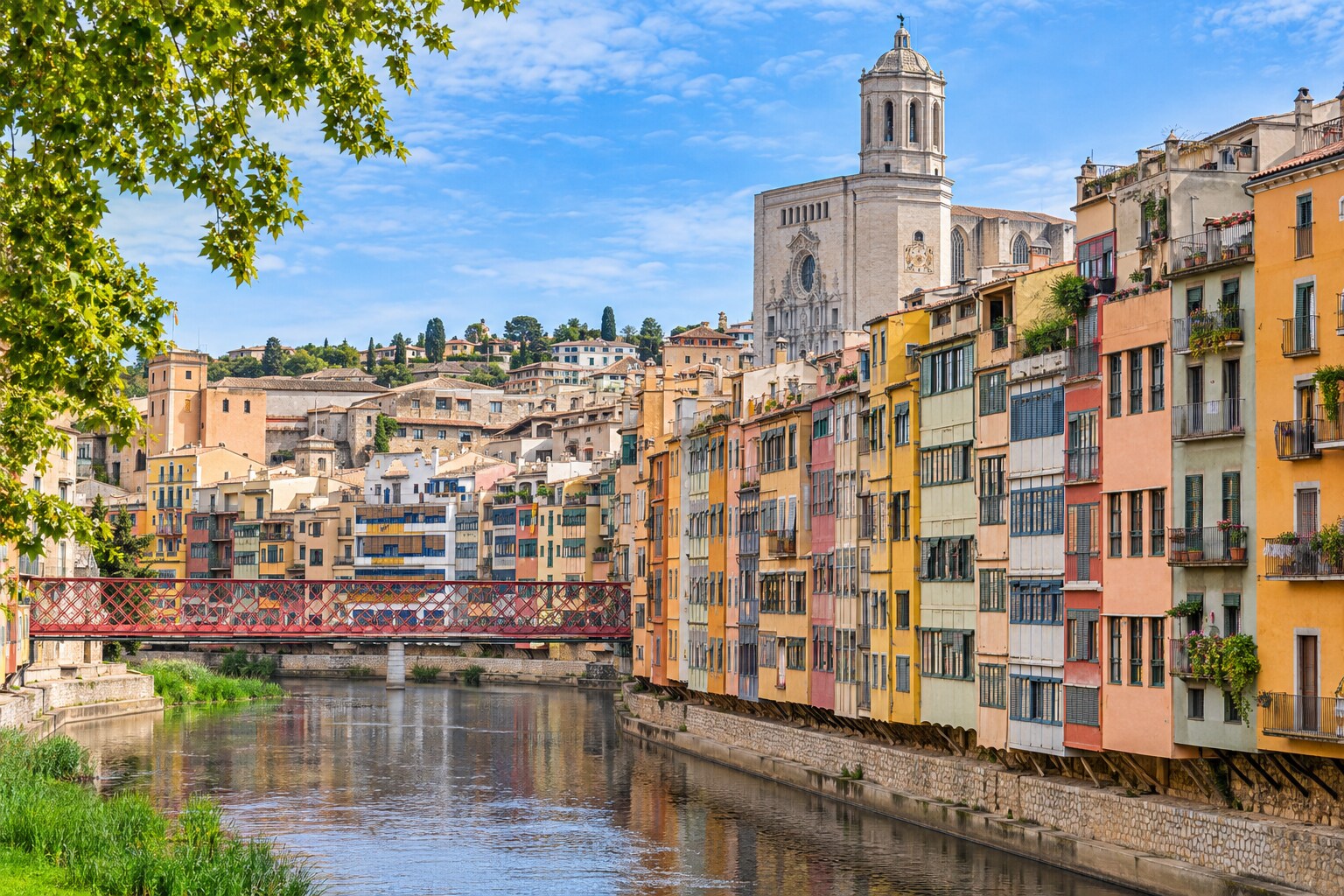
Search for trains from Barcelona Sants to Girona. Compare the faster reserved services with regional trains on the date you’re going. From Girona station, walk towards the River Onyar and cross into the old town. The river bridges make a good starting point. Around the cathedral and city walls, expect more climbing and steps, so build your route around what your group can comfortably walk.
Tarragona for Roman ruins with a sea view
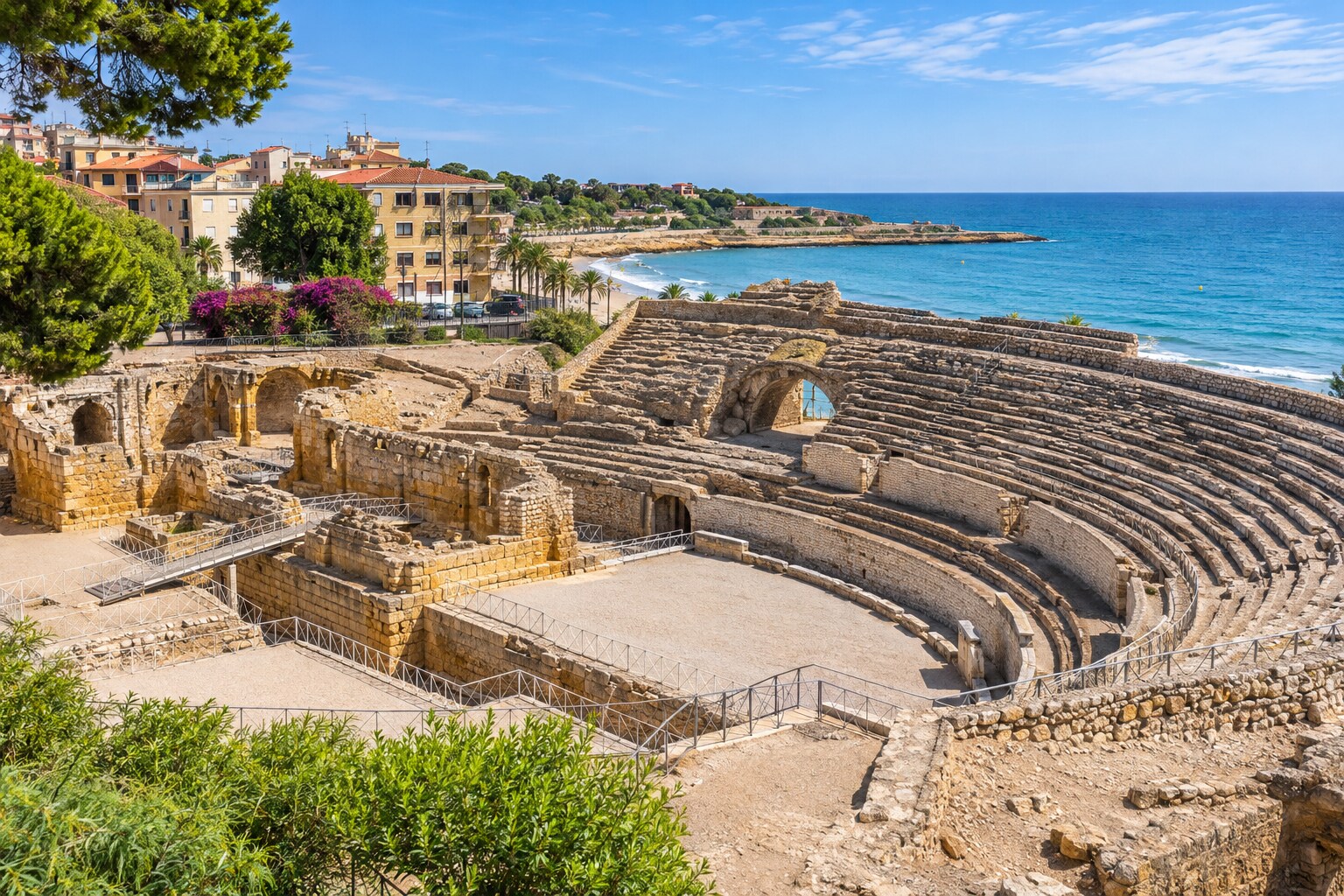
For the simplest walk on arrival, search for a train to Tarragona, the city station. Camp de Tarragona is a separate station outside the city and needs an onward connection. From the city station, plan an uphill walk towards the old town and amphitheatre. Check the amphitheatre opening hours first, especially outside summer or around holidays.
Which trip should you book first?
I’d sort Montserrat first if you want a particular connection or monastery visit. If you’re taking a reserved train to Girona, compare ticket options early. Keep Sitges flexible if your main plan is a stroll by the water, and use Tarragona for a day when you have time to see more than the amphitheatre. Check both directions for your date and leave enough time to walk back to the station.
Match the trip to the time you actually have
Just an afternoon: Sitges is the easiest fit. You can get off the train, walk into town, see the church and have a drink by the water. You’ll have more time out in the fresh air and less time watching a clock. It’s also a useful option if your morning in Barcelona runs late.
A full day with a mixture of sights: Girona gives you riverside streets, museums, cafés and the old town in a compact area. Tarragona works just as well if your group leans towards Roman history and coastal views. For both, pick one main sight and one optional stop so a long lunch or an unexpected queue doesn’t throw out the rest of the day.
A day outdoors: Save a clear day for Montserrat. Check the weather where you’re going as well as in Barcelona. If you’re building a walk into the trip, decide on a turnaround time based on the ride down. A beautiful mountain view is still a beautiful mountain view if you only stay long enough for one trail.
Three small itineraries for beyond the station
Girona: Start at the Onyar bridges, then climb into the old town towards the cathedral. If the weather is good and your group is comfortable with steps, take in a section of the city walls. The Girona tourist office site offers a city map, and its city walls guide shows access points. Keep an eye on the return walk to the station if you’ve booked a reserved service.
Tarragona: Start at the Balcó del Mediterrani for a view of the coast, then head for the Roman amphitheatre. If you have more time, continue to the Part Alta for the old town, cathedral area and a break in one of the squares. Check the official opening calendar for the monuments you want to enter. For a different pace, make the day mostly a walk and pick just one paid site.
Sitges: Link the station, church and promenade on a short loop, with the old town on one leg and the seafront on the other. The Sitges visitor map shows beaches, museums and facilities. If rain is likely, look up the museums before deciding whether to go or switch to Girona.
Booking, transport maps and common mix-ups
Use the Barcelona metro and bus map to work out the first leg to your station. Sants, Plaça Espanya and Passeig de Gràcia are useful starting points for different reasons. Check the operator’s name alongside the station name, especially at a large interchange. A city metro ticket, a regional rail ticket and a reserved mainline booking work differently.
For a reserved train, leave time to find the right departure area, and keep your return confirmation available offline. For a local service, check the day’s engineering notices and the last comfortable return. If someone in the group needs step-free access, check the railway station and the walking route in town separately. Girona’s old town and Montserrat’s longer walks can be quite different underfoot from Sitges’ seafront promenade.
Can you fit two destinations into one day?
For a first visit I’d stick to one, especially if you want time for lunch and a proper look around. Sitges is the exception if you want a seaside afternoon after a morning in Barcelona itself. For the longer trips, an early start and one clear destination gives you enough time to improvise when you arrive, which is usually when the day gets interesting.
Plan your journey: Rodalies R2 Sud · FGC R5 · Renfe journey planner.
For more ways to spend your time in the city, see our Barcelona guides.
Keep planning: Sitges by train guide · Montserrat by train guide.
