
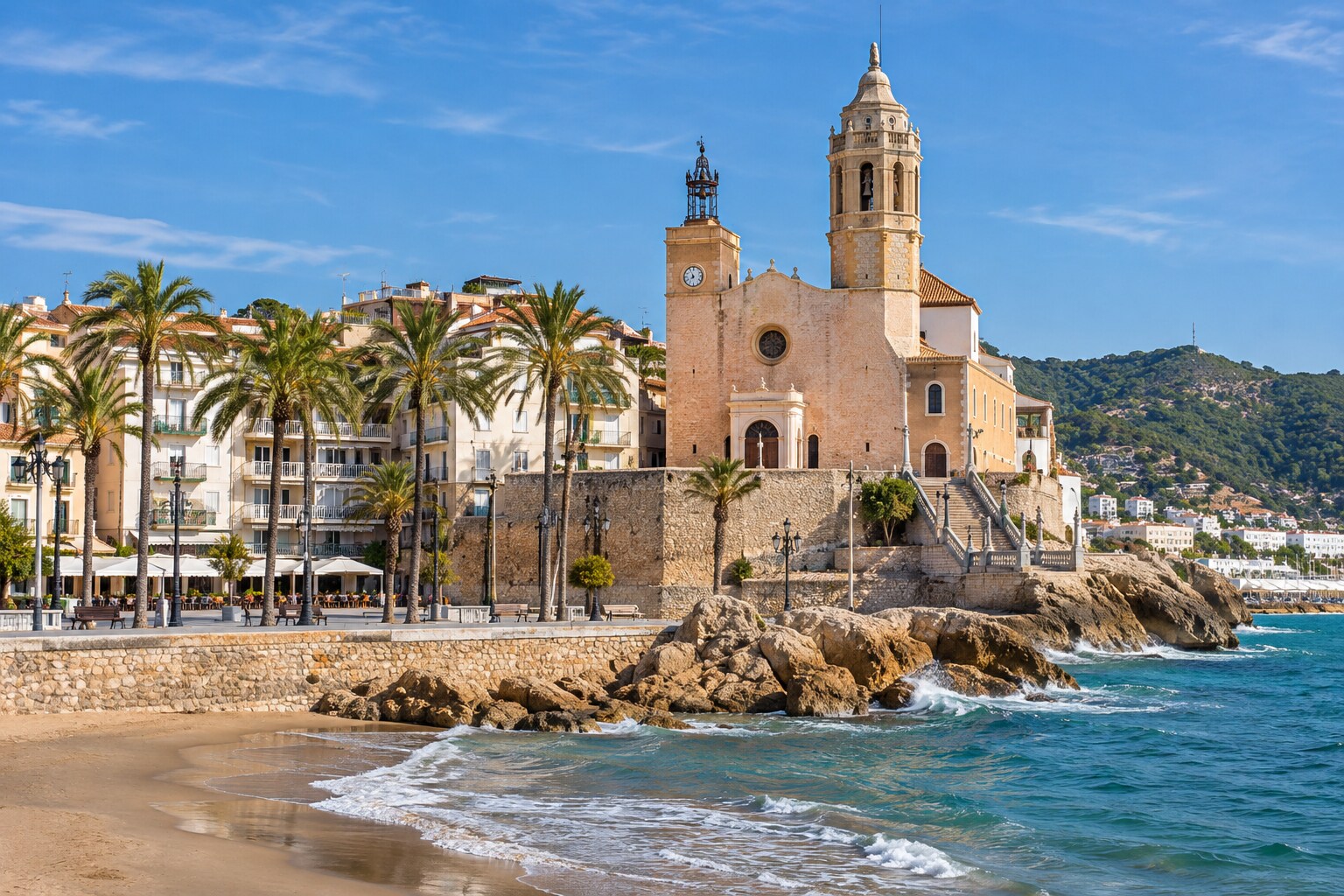
One minute you’re working out which exit to take at Passeig de Gràcia. A short train ride later, you can be looking down a whitewashed lane towards the Mediterranean. Sitges is the Barcelona day trip I’d suggest when the whole point of getting away is to do a little less. Travelling from Barcelona to Sitges by train leaves you the better part of the day to enjoy the coast.
The quick answer: Take the R2 Sud suburban train to Sitges from Barcelona Sants, Passeig de Gràcia or Estació de França, depending on the service. Check that Sitges appears on the departure board. The train’s final destination may be farther down the line.
Pick the right station in Barcelona
Passeig de Gràcia is handy if you’re staying in the Eixample or near Plaça Catalunya. Follow signs for Rodalies, as the metro shares the station name. Barcelona Sants works well from the western side of town or if you’re already arriving by mainline train. Estació de França can make sense from El Born or Barceloneta when the service you want starts there.
Open the Rodalies timetable for your date, look for R2 Sud and buy a ticket valid to Sitges. If you already have a Barcelona travel pass, check its zone coverage before boarding. Keep your ticket handy for the barriers at either end.
Walk from Sitges station to the sea
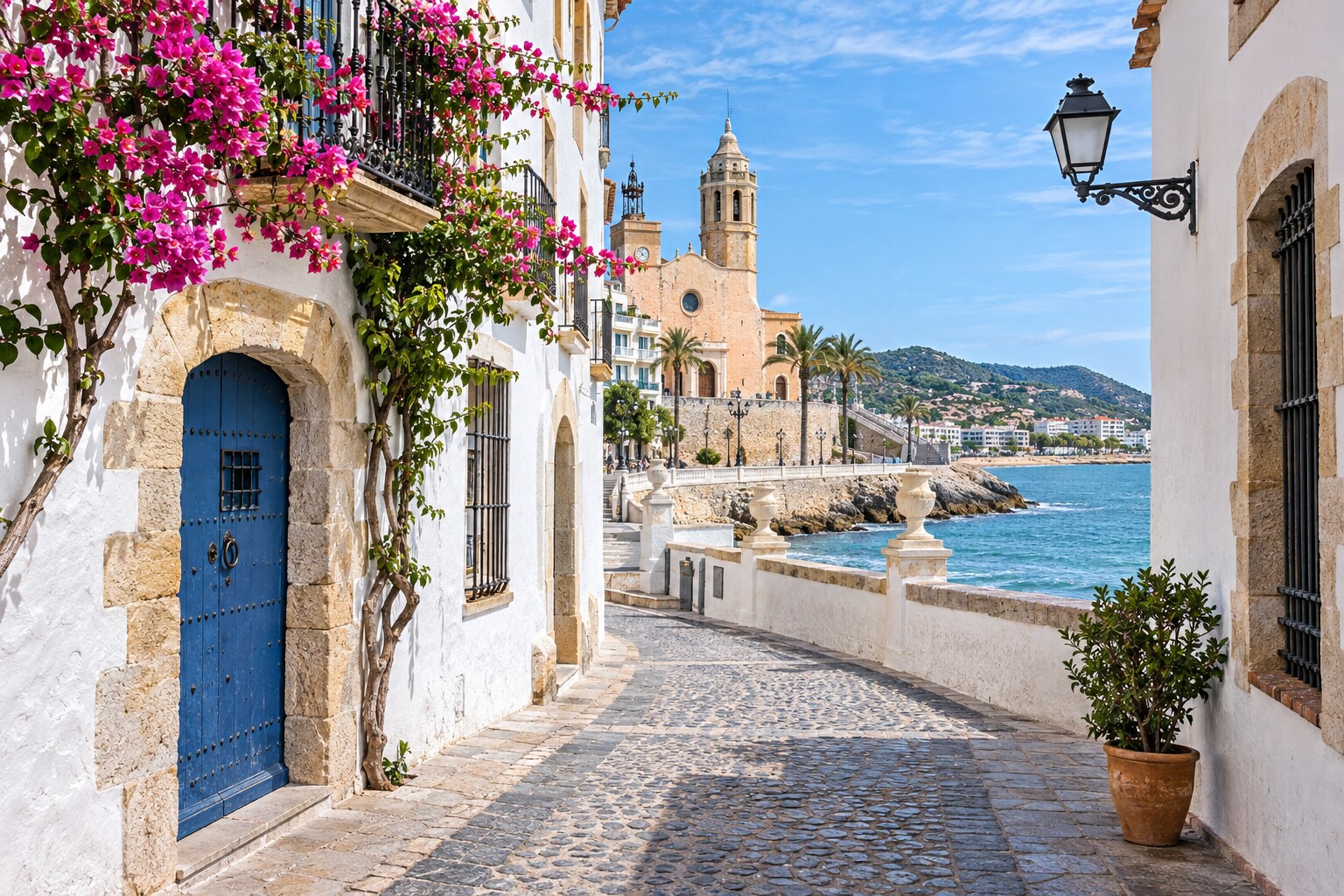
From the station, head into the centre via Carrer de Jesús and wander towards the old town. The church of Sant Bartomeu i Santa Tecla sits above the waterfront, where you can get your bearings before choosing which way to walk. Platja de la Fragata is just below the church area. For a longer, gentler stroll, follow Passeig Marítim west along the waterfront.
With half a day, I’d pick the old town and one stretch of promenade, then stop for lunch. With a full day, add a museum or beach stop and leave a bit of time for the small streets behind the seafront. The beauty of Sitges is that you can change your mind as you go.
Heading back to Barcelona
Check the return before you sit down for dinner, especially on a Sunday or during engineering works. Confirm which Barcelona station the service calls at and check the platform at Sitges on arrival. If step-free access matters, check your departure and arrival stations with Rodalies and plan a waterfront route with fewer changes in level.
A half-day route through Sitges
Make the old town your first stop. Walk from the station towards the church, then take a moment to look both ways along the coast. Go down towards Platja de la Fragata for a quick look at the sand and harbour area. From there, turn west for the broad promenade or loop back through the small streets if the sun is strong. Give yourself time to stop somewhere that catches your eye. A day by the sea rarely improves when you start timing every corner.
If you arrive around lunchtime, take a short walk first so you can decide which part of town you’d like to eat in. The waterfront is an easy option if you want the view. A few streets inland, you can pick a place closer to the station for the return. Keep a pin for the station exit on your phone, particularly if you expect to head back after dark.
Make a full day of the old town and beaches
Start with the waterfront lanes around the church and the museum quarter. The Museu de Maricel and Cau Ferrat are worth looking up if you’re interested in art or want a break from the heat. Check the opening days and current visit arrangements through Sitges Tourism. If one is the main reason for your trip, sort that out before choosing a departure from Barcelona.
Continue round to Platja de Sant Sebastià for another view of the old town and a quieter-feeling stretch of seafront. Or walk the other way from the church towards the wider promenade and spend the afternoon west of the centre. The official Sitges map of beaches, museums and visitor facilities is useful for plotting the route and finding the tourist office.
What to watch for when you travel
Barcelona Sants is big enough that finding your way from the street to the suburban platform can take a little longer than it looks on a map. At Passeig de Gràcia, follow the rail signs rather than the first entrance with a metro symbol. On a busy beach weekend, leave yourself room to take the following service if the first one is crowded, and keep the return flexible until you’ve checked the actual timetable.
Sitges is compact, but the old town has slopes and steps. A beach wheelchair, changing facilities or a particular step-free route can make the difference for some visitors. Check current beach and facility details with the tourist office, and confirm any rail assistance separately. On a hot day, plan a shorter route with a break indoors. In cooler weather, the promenade and old town make a satisfying trip even if swimming was never on the cards.
One easy decision before you leave Barcelona
Pick either a beach afternoon or an old-town-and-museums day as your main plan. That helps you pack for the right outing and makes it easier to change tack if the weather turns. For a beach visit, use the tourism site to check facilities and seasonal services. For a cultural visit, have one indoor stop and one outdoor walk in mind. The official tourism homepage also lists local events, useful if a festival falls on your visit and you want to plan around crowds or see what’s on.
Coming straight from the airport?
Plan that trip separately. The R2 Sud through Sitges is a different service from the R2 Nord airport train. Search from your actual terminal and check the interchange shown by the planner, particularly if you have bags or are arriving late. If you’re visiting Sitges as a day trip from your Barcelona accommodation, use the city departure that makes the morning easiest and keep the airport route out of the equation.
Plan your journey: Rodalies R2 Sud line and stations · Sitges tourism train information.
Spending a few days in the city first? Start with our Barcelona guides.
Keep planning: Barcelona day trips by train.
